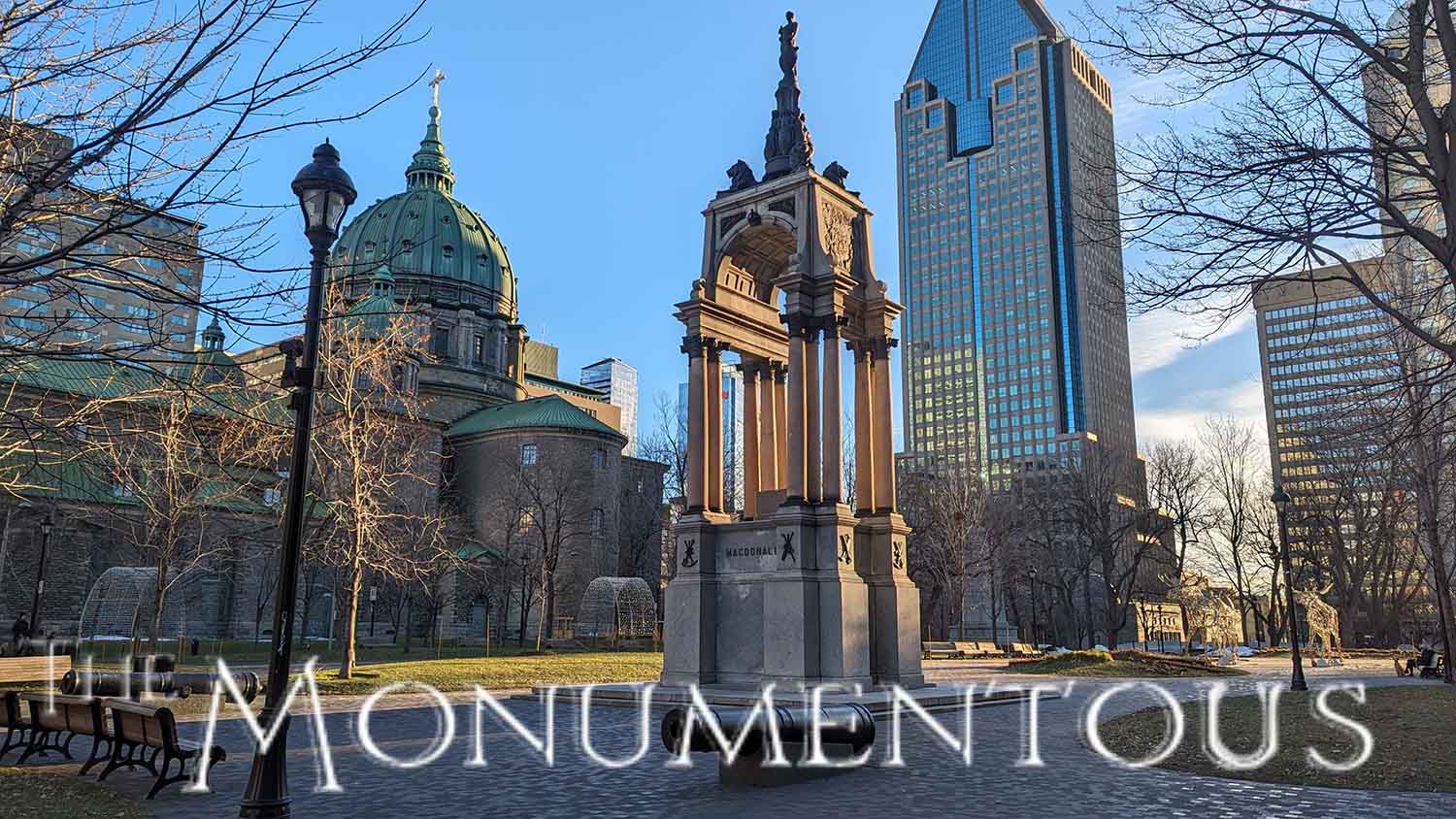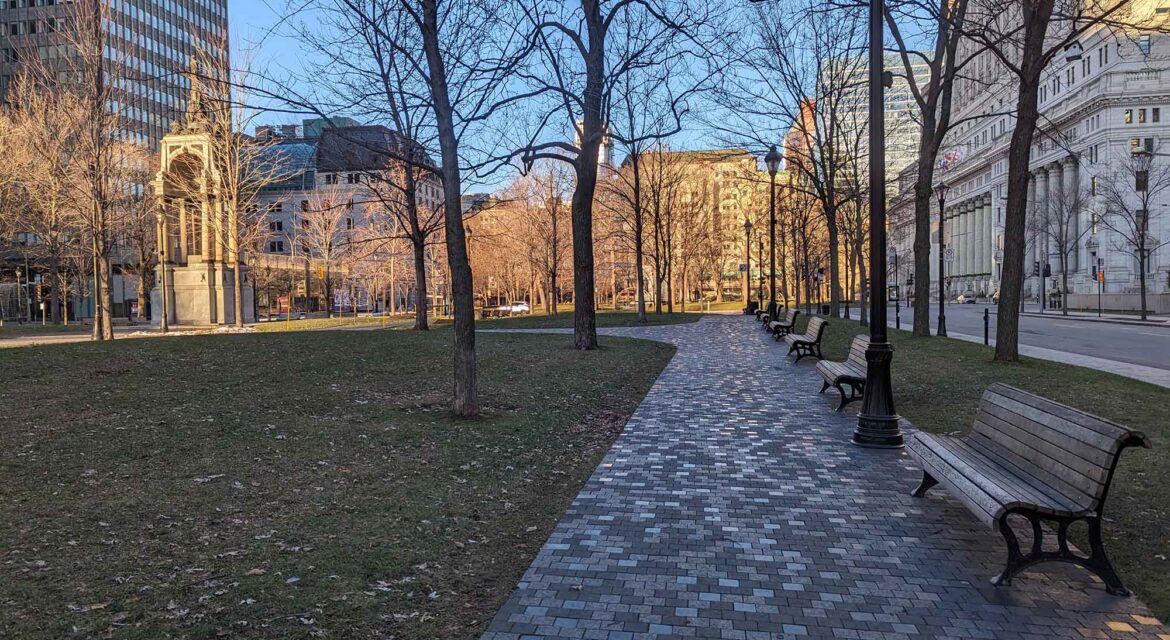

 Considered to be the heart of downtown Montreal, the monuments that define Dorchester Square and the adjoining Place du Canada are connected to the history and legacy of the city and the entire nation of Canada. These monuments enliven what would otherwise be a plain greenspace, showcasing what it can mean for landmarks to create engagement that connects the past to the present of an entire community.
Dominion Square and beyond
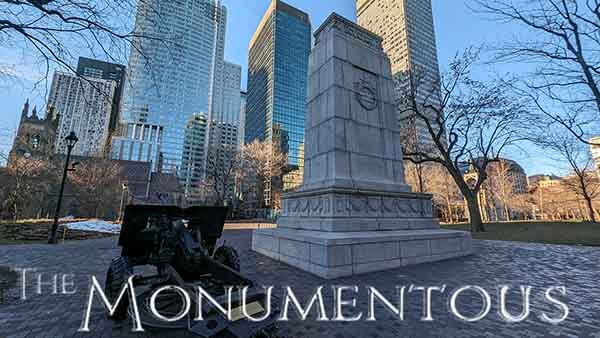 First established in 1880 on the site of Saint-Antoine Cemetery, the urban greenspace was named Dominion Square in reference to the creation of the federal Dominion of Canada in 1867. Four statues were originally arranged in the form of a Union Jack while many of the buildings as well as the layout of the space itself reflect Montreal’s Victorian era. All four original monuments remain in the space except for the Fountain Commemorating Queen Victoria’s Diamond Jubilee.
In 1967, the Square was divided into two sections. The northern section was renamed Dorchester Park as a tribute to Baron Dorchester, a former governor of British North-America known for his support of the French in British North America. The southern section was renamed Place du Canada to celebrate Canada’s centennial anniversary.
As the space has evolved, so have the monuments within it in a way thats connect with the legacy of the city and nation, enabling audiences to engage with the space on multiple levels.
The Boer War Memorial, Tribute to Sir Wilfrid Laurier and more
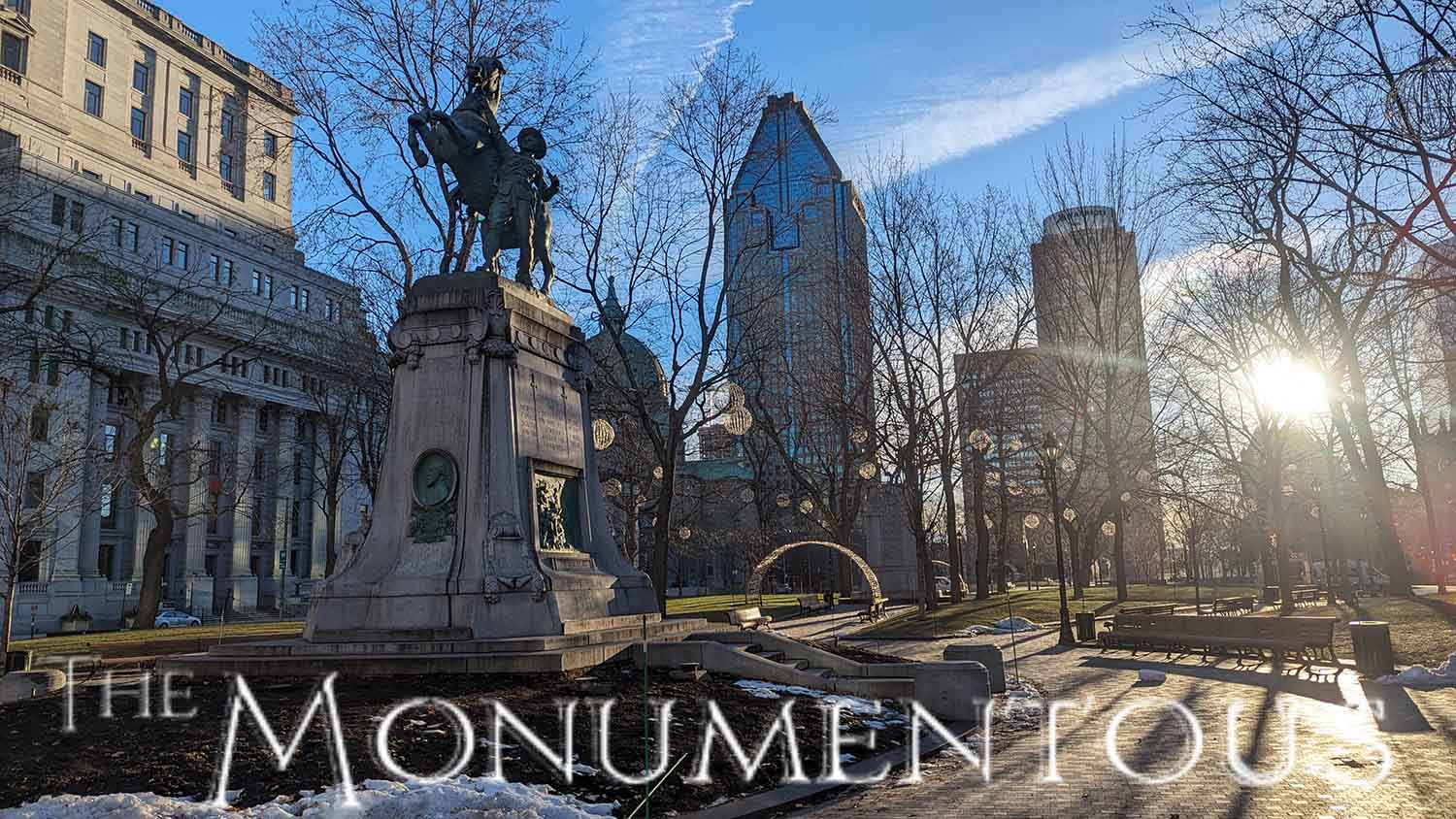
 The Boer War Memorial is arguably the most significant monument in the space. Installed in 1907, it is the only equestrian statue in Montreal and according to the describe is designed to “commemorate the heroic devotion of the Canadians who fell in the South African War and the valour of their comrades.”
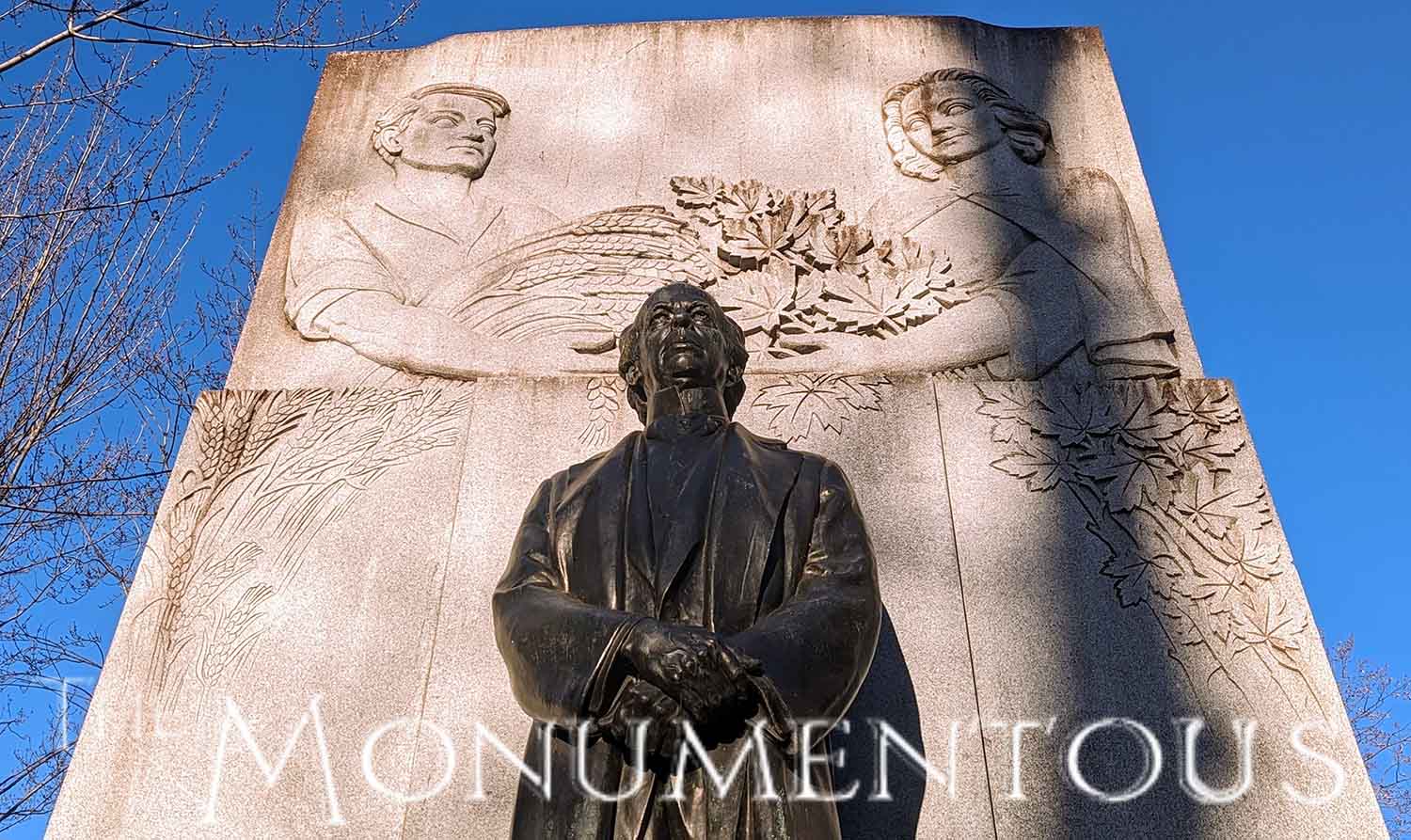
Canada’s first French-Canadian prime minister is honored with the Tribute to Sir Wilfrid Laurier that was created in 1953. A statue of Laurier resides under granite relief of the provinces created and united under his administrations. Above him is a bas-relief of man and woman sharing the harvest.
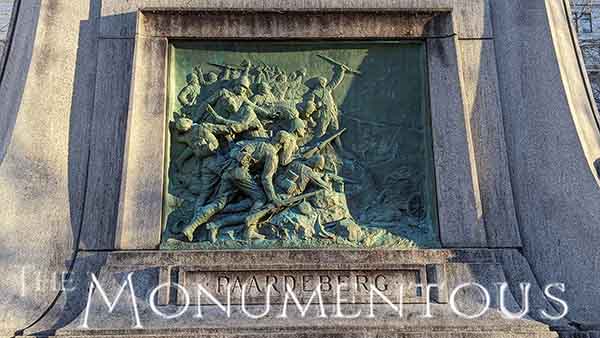
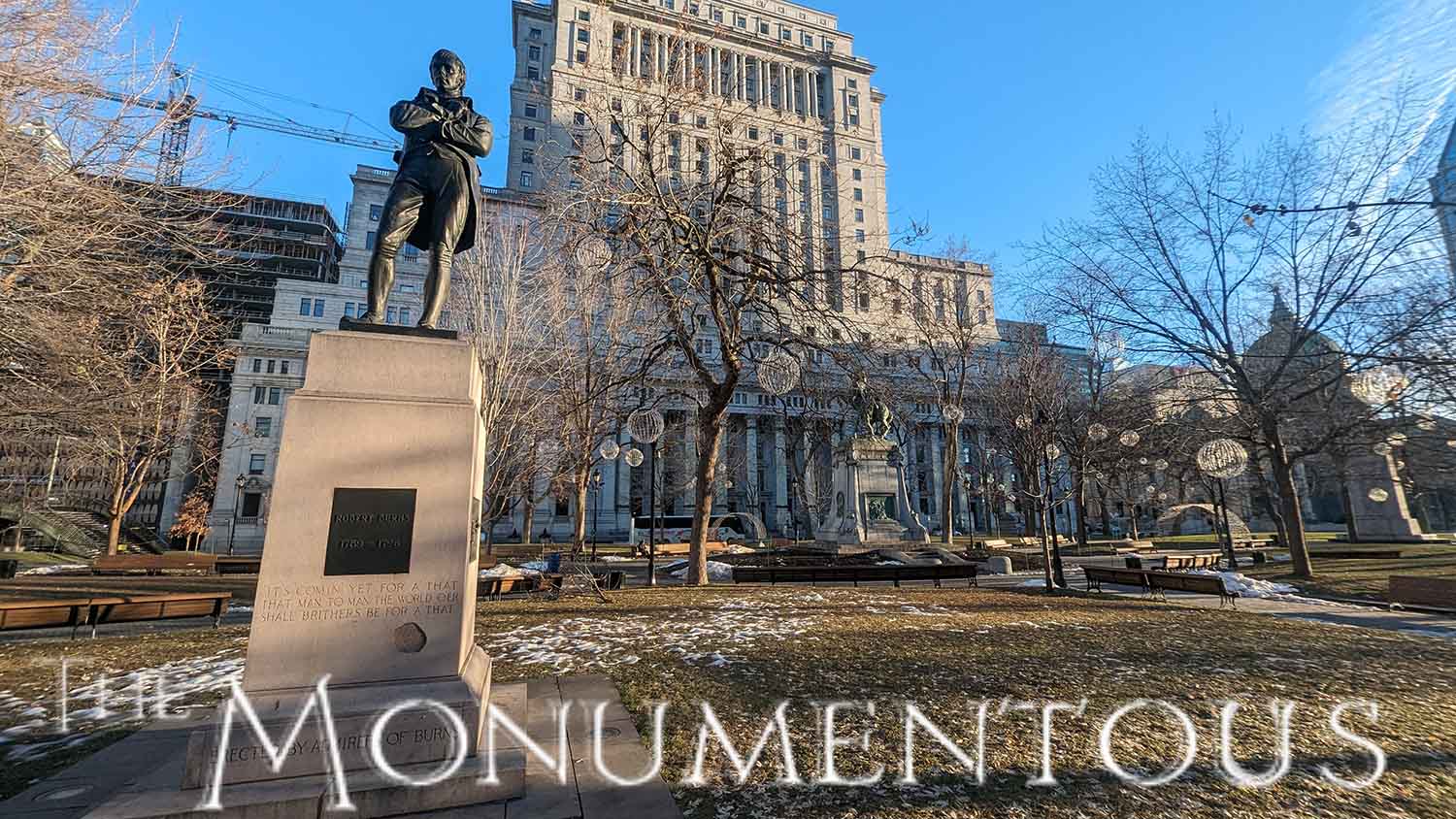
The Boer War Memorial, Tribute to Sir Wilfrid Laurier and Robert Burns Memorial were three of the four original monuments in the space. Over the years, others were added, including the Lion of Belfort, two canons captured in the Crimean War and the Montreal Cenotaph. The Macdonald Monument was created in honor of John A. Macdonald, the first Prime Minister of Canada. Installed in 1892 it was vandalized and toppled in 2020, forever changing the space.
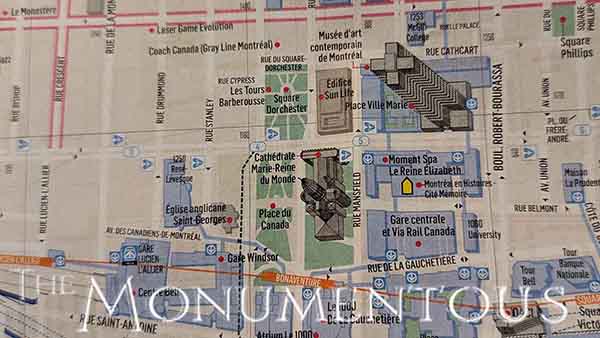
This installation and destruction of monuments in Dorchester Square and Place du Canada are connected to the evolution of the city and community, showcasing what is important to them as what has fallen out of favor. Featured in maps and guides to the city, this connection is one that spaces of all types can utilize to create engagement that connects with the hearts and minds of audiences across the eras.
Evolution of a culture and legacy
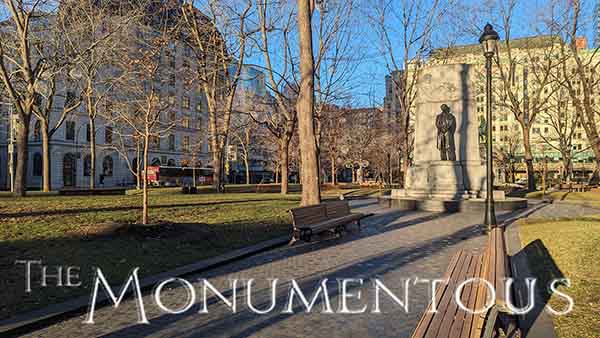 Featuring an ample amount of space and landmarks for audiences to actively engage with or passively appreciate, the monuments of Dorchester Square and Place du Canada have enabled the space to become a true hub of activity for the entire city that expands all the way across the province of Quebec and nation of Canada. In doing so, this collective landmark highlights what it can mean to create engagement that extends across eras and nations.